

What a Perfect Moment Taught Me about Anger
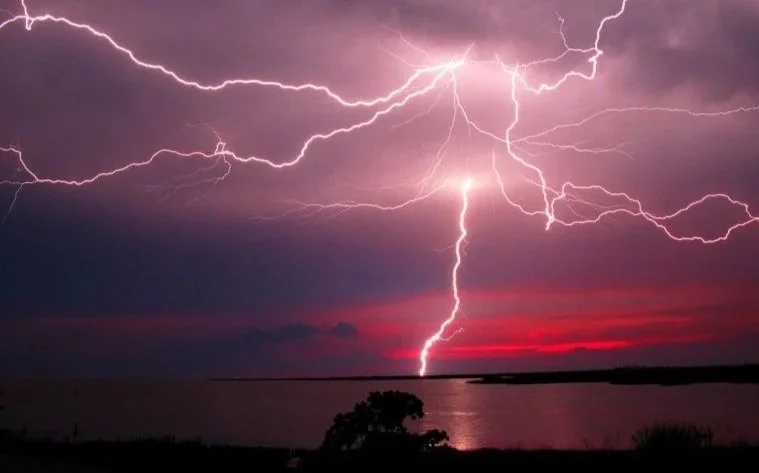
One of my fondest memories is from one night in Thailand. I was alone at a café on the banks of the Mekhong River, looking across into Laos on the other side. The weather was perfectly clear where I sat but, no more than 100 yards away, a fierce storm traveled along the opposite shore. I watched from afar, the moon overhead in an otherwise vacant sky, while comfortably sipping my coffee. I marveled at the storm’s symphony of lightning strikes as it crawled, like a wounded goliath, along the river's edge apart from me. It was a truly beautiful hour of my life.
More than two decades later, during a counseling session, this memory unexpectedly resurfaced out of nowhere. My client and I had been talking about how she could better handle being face with someone's anger towards her. In that moment, it suddenly occurred to me that a confrontation with someone who is “storming” can be very much like that night in Thailand was for me, and just as peaceful. This was quite the exciting hypothesis!
I was shocked by this at first. How was it that I was comparing one the most luxuriously content moments of my life to a type of moment most of us dread, moments where we find ourselves the recipient of someone else's rage. The comparison seemed outlandish at first glance, yet made perfect sense upon reflection.
You see, whenever someone is in a state of anger, it’s as if they’ve become a storm. Even if this person is directing their anger towards us, yelling and screaming, calling us names, making accusations about what we did or did not do to their liking, as long as this person isn’t physically threatening us, we can remain safe and secure—in essence, comfortably sipping our coffee beneath a moonlight sky.
With The Art of Giving Permission™, we can simply observe this person, almost from afar, just as if we were watching a storm pass slowly along the opposite side of a river. We can imagine the space between us and this person as a safe enough distance, just as the Mekhong separated me from the storm in Laos those many years ago. Instead of paddling across the river to jump into their deluge, we can sit back and actually just watch.
And, sure, storms can be scary sometimes. But, when we realize that we aren’t the ones in the storm, we can shift our perspective from one of reactivity, fearfulness, defensiveness, or aggression to one of compassion instead. We can appreciate the storm for the beauty inherent within it—its symphony of lightning strikes—without forcefully trying to quell it, flee from it, or enter it. We can even let ourselves view this storm with fascination, curiosity, and delight.
That people get angry upon occasion really isn’t such a horrible thing. Storms happen, and that’s okay. Obviously, apathetic people rarely—if ever—lose their temper. That someone emotionally escalates into anger reveals something very important about them: they care, and apparently a lot. Even if the manifestation of this caring isn’t as mature as we would like, we can recognize before us a person whose heart is hurting and yearning for some sort of change. There’s actually something worth celebrating about this.
The key is to remember that, even if someone else’s storm is very near to us, it is not our storm, nor directly overhead of us, unless we rush heedlessly into it. If we want, we can remain free from electrocution and drenching just by staying put. We can best protect ourselves—and the relationship—by appreciating the beauty of the storm. We can savor such a moment completely, watching from the safe distance afforded by The Art of Giving Permission™.
So, the next time you are confronted by someone in a fit of upset, relax. Sit back in your own contentment, breathing in a moment of deep appreciation. Understand that this storm you’re facing isn’t your storm; it’s just another beautiful and normal expression of Mother Nature. Fearlessly cherish the magnificence of this, another human being, little different from yourself, trying the best they can to live the best life possible.
If you do this, I guarantee that this person’s storm will diminish more quickly than if you were to actively try to get them to stop. Since stillness creates more stillness, your calm will invite an alternative pathway to argument, such that their tempest cannot help but subside. And, when it does, you and this person can again unite beneath the moonlit sky to chat about the topic at hand. This is what a perfect moment can teach us about anger.