

How Relationships Evolve (or Fail)
There’s nothing like the feeling of falling in love. There's that spark of aliveness and vibrancy, energy, passion, and epiphany, like everything has fallen perfectly into place and just makes sense. Life seems so full of meaning and beauty and purpose. To encounter another person in this way is one of the most extraordinary experiences we can have. It fills our hearts and imaginations with visions of lifelong bliss and union, as if we have at long last discovered our soulmate, our ride-or-die, the person with whom we can enjoy lifetime companionship.
For most, over time, the scintillation of this "honeymoon phase" dwindles. Little by little, the glistening shine of new love dulls and the relationship settles into something that feels more routine, more mundane, more ordinary. It evolves (not devolves, evolves) into something distinctly less intoxicating, less lustful, less awe-inspiring. When this happens, doubts might arise. One or both partners may consider whether they were wrong about how they felt before, that maybe—as it turns out—this person really isn't their soulmate, or that there is something wrong with the relationship, something that needs fixing.
In couples counseling, I use a diagram to explain the completely natural, evolutionary process that nearly all romantic relationships go through. Some survive this; many (if not most) don’t. Here’s what typically happens.
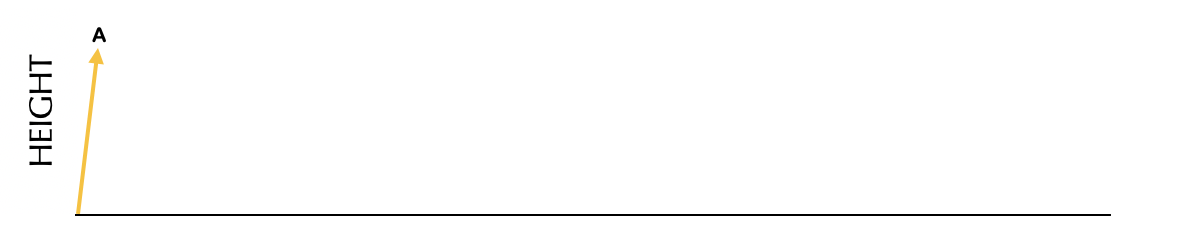
Point A: The relationship has quickly ascended to a great “height”, characterized by feelings of elevated excitation, enthusiasm, passion, thrill, “butterflies”, etc. This is so delicious and wonderful! It’s honestly too bad that this cannot last forever. Let me repeat that so it’s crystal clear. This. Cannot. Last. Forever. So, it’s best not to expect it to, which brings us to…
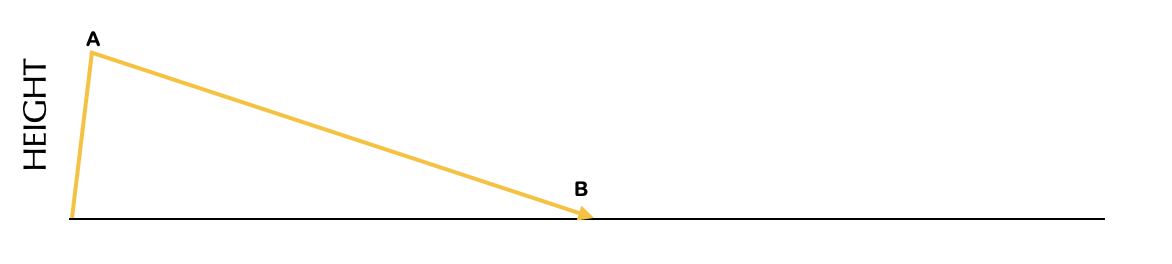
Point B: The “height” of the relationship has subsided over time, eventually reaching a point where the relationship feels, well, unspectacular. This process could take weeks, months, or years, but it’s inevitable, even for the greatest and most enduring of romantic relationships. The energy (and sense of novelty) required to generate height is simply too exhausting to persist indefinitely. Because of this, the relationship inevitably calms into a more sustainable state. This is a good thing! But…. point B is also the place where most couples behave in ways that ultimately lead to the relationship’s demise. The typical path taken looks like this:
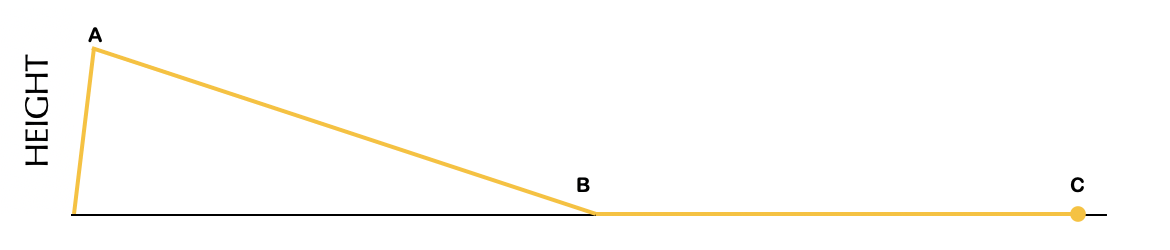
Point C: The break-up or divorce. This generally happens after a prolonged period of flat-lining, where one or both partners feel as if the relationship has become stagnant, lackluster, or boring, more like roommates or friends than lovers. “I’ve just fallen out of love,” one partner may say. “I can’t explain it.” Thankfully, I can.
An avoidable mistake was made at point B. Likely, once here, both partners noticed that the relationship had lost some of its earlier pizazz and decided to do something about it. They might have put regular date nights on the calendar, gone on an exotic vacation or two, or tried to spice up things in the bedroom. None of those things are problematic. The mistake was the intention behind them: their effort to regain height. Their intention was to move the relationship to point D.
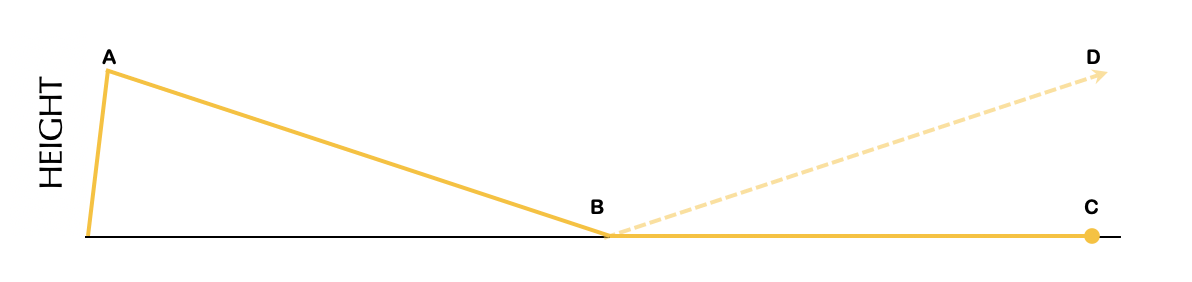
It is the effort to get to point D that causes stagnation in a relationship. This exerts counter-force that opposes the natural evolution of a healthy relationship and results in the relationship getting stuck on the path to point C. Yes, all romantic relationships lose height over time, but they gain something else in the process: depth. Luckily, depth matters more than height. Not only is depth sustainable, but there’s no limit to how greatly the depth of a relationship can develop it matures.
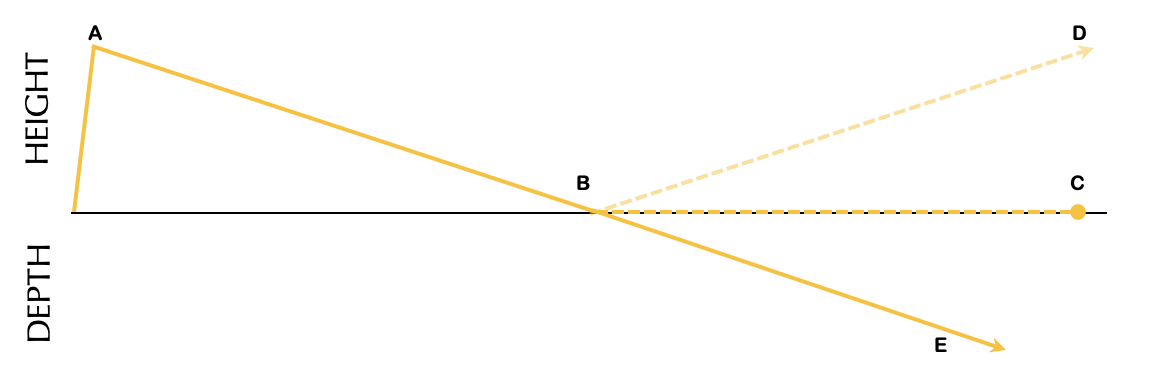
Relationships that avoid the mistake of seeking point D flow effortlessly onto pathway E. I say pathway here, instead of point, because being on this path has no final terminus. It can just keep going and going and going. This is the trajectory we want to aspire toward when we’re in a relationship intended to be lifelong, for it is within the depths of human connection that true familiarity, comfort, and intimacy are experienced at its finest.
Relationships falter when they resist the natural trajectory of intimate relationships from the majesties of height to the majesties of depth. We only get in trouble when (at point B) we mistakenly assume that something is wrong with our relationship, when nothing could be farther from the truth. We are right where we are supposed to be! If we attempt to alter the trajectory back upwards, back toward height, we cancel out the natural evolution of our relationship and plateau.
“The VERY Best Relationships Evolve From Great Height to Great Depth.”
If you ever ever feel that your relationship is trudging along between points B and C, chart a new course. Stop striving for a return to previous height, but aim instead for the depth that you haven’t been savoring. After all, if you’ve gotten to this point in your relationship, a significant amount of depth is already there; it just has yet to be fully appreciated or cultivated even further. Value it. Realize that you don’t know as much about your partner as you think you know. Avoid complacency. Every person is a constantly changing phenomenon, such that the partner you “knew” yesterday is someone else by now. Care about meeting this new person. Spend quality time together. Appreciate one another. Connect. Not as much is missing from your relationship as you think. Revere what’s there (and growing), rather than what’s been naturally lost since the early stages. You can still go on date nights and exotic vacations and expand your bedroom vocabulary, not as means of reclaiming that old spark, but as a way of continually increasing the depth of the connection that exists between you. Do this, and your relationship will last as long as you desire.