

Rethinking Failure: We Are Sparta!
There's a lot of talk on the internet about success, how you can do anything you set your mind to if you just believe in yourself and follow a certain set of tips or guidelines, buy a particular book, or register for this or that class or workshop. We're in the throes of a "YOU CAN DO IT!" era, for sure, which isn't necessarily such a bad thing. It's just that every online street corner seems anchored by someone hocking their personal brand of success steroids (guilty as charged). Success, success, success. Somehow it all leaves me feeling like failure is getting more than a bit short-changed, like it's the ugly step-sibling, locked in the cellar while success gets all the accolades and attention.
If you knew that you were going to fail at something, would you still do it?
Be honest with yourself in your answer. If failure at something was absolutely guaranteed, would you proceed regardless?
When I asked my wife this same question, she quickly responded, "No, of course not." Instinctively, it's the answer most of us are bound to give, despite the fact that, given a moment to more deeply reflect upon the question, we might add, "Well, it depends..." (as my wife did). The point is that our reflex to answer with a "No" exposes our concrete bias that failure is bad, failure is to be avoided, failure is not worth our time and effort.
This topic of failure and our cultural prejudice against it cropped up for me this past week for one clear reason. I was struggling with making a decision about whether or not to go through with THE SPARTAN SPRINT, a 5+ mile long, 20+ obstacle course for which, several months earlier, I had, in a moment of delusional optimism, registered (at the encouragement of a client of mine).
Especially as my age advances (45 as I write this), and it becomes increasingly difficult to keep pace with my two toddler sons, an inner voice keeps urging me to take action, now while I still can. When I signed up for the Spartan Race, I thought that doing so would motivate me to get in better shape. I'd start running to build my endurance and working out to grow physically stronger. I'd eat better, cleaner, drink more water, and truly make fitness a priority in my life. But, oh, I've been down this familiar road before.
Over the past decade or so I've signed up for 3 or 4 similar events (triathlons and the like) and the story has always turned out the same. I register, plan to train, don't train, then sheepishly elect not to attend the event once start time arrives. And each time my reason has been exactly the same: “Why bother when I already know I am just going to fail? I am completely unprepared!”
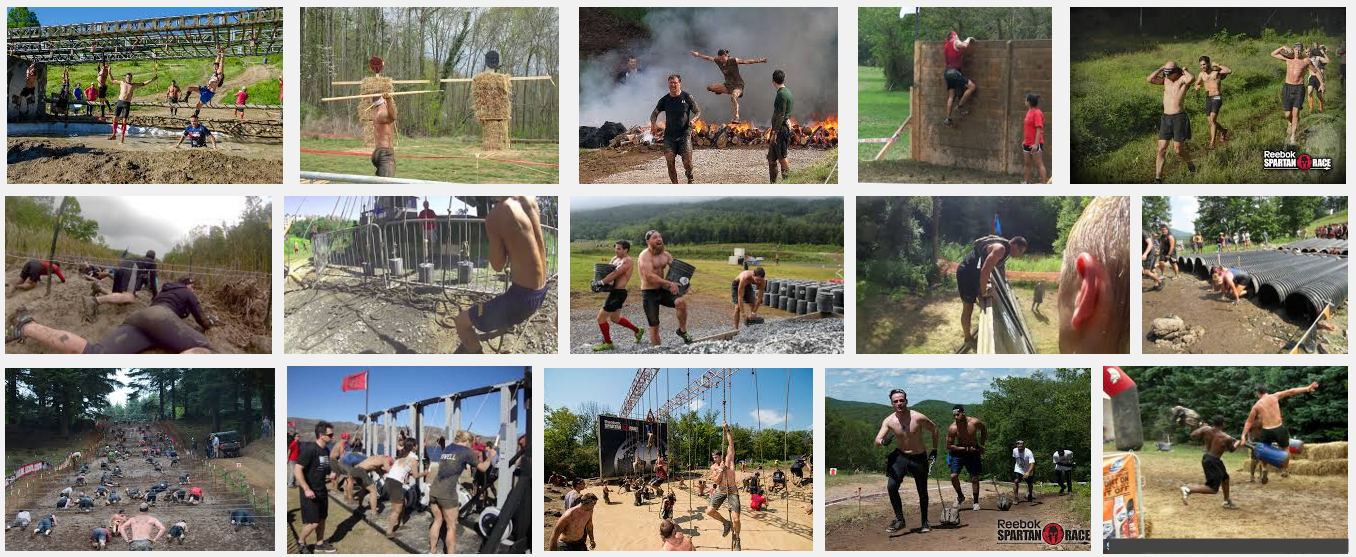
This time it's no different. I haven't trained at all, not a lick. I haven't started running or working out, eating better, drinking more water, or making fitness a priority in my life. Not only that, it's not like I am a reasonably athletic person. I've had asthma since childhood, never exercise, sleep little, and sustain myself primarily on a diet of coffee and nicotine. My odds of finishing the Spartan Sprint? Zero. I mean, take a look at what it entails:
The Spartans are warriors, the epitome of fierceness, toughness, strength, and perseverance. Big muscles, big egos, big machismo. Me? I have teeny-weeny muscles, a mid-sized ego, and maybe some masochism, but no machismo.

These are not things I do, nor know how to do, nor have the physical ability to do. I am not a wall-hopping, fire-jumping, javelin-throwing, mud-crawling, monkey-bar-traversing, cargo-net-scaling, rope-climbing. extreme sports dynamo. I'm a therapist who spends almost every day of his life just sitting in a comfortable chair talking to people. I mean, seriously? Should I really schlep myself on a 2-hour drive to slap my chicken legs into some spandex and a make a fool of myself when I collapse, dry-heaving, at the foot of the first or second obstacle?
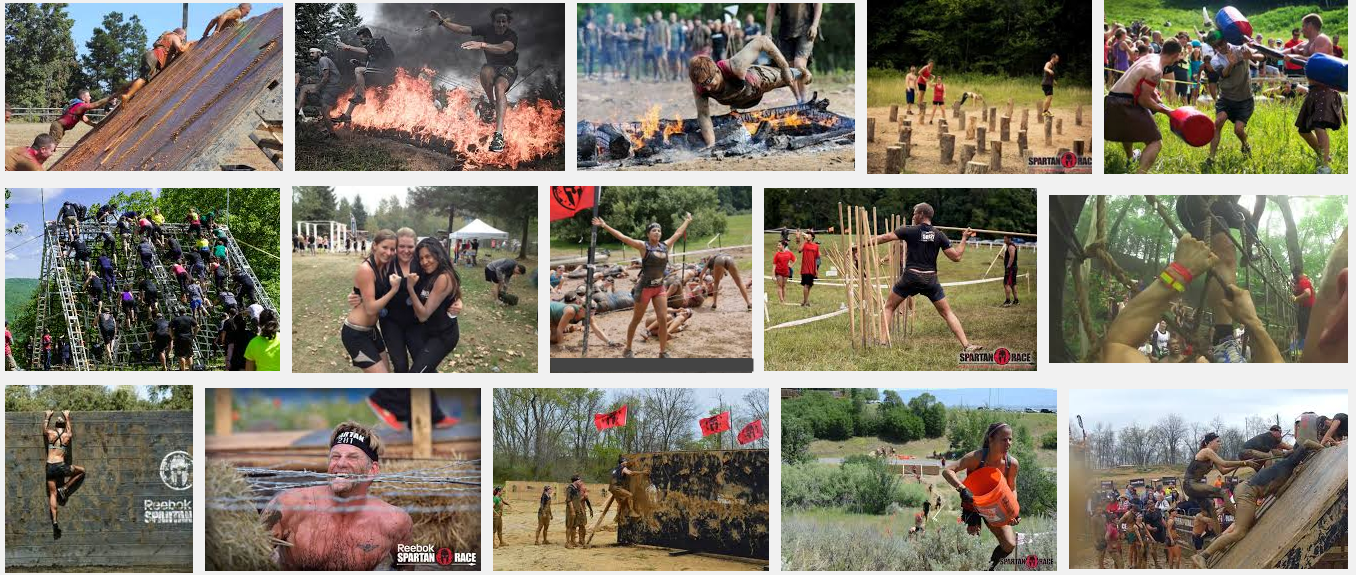
Totally, utterly intimidating. Failure inevitable. So the debate (and doubt) raged onward. Go or don't go? Go or don't go? Go or don't go? Which is really the debate of, "Fail or don't fail? Fail or spare myself the aggravation? Fail or just chalk it up to another case of good intentions, offering up a gentle and conciliatory maybe-next-time?" Admittedly, all the latter options seemed by far the more appealing.
If you knew that you were going to fail at something, would you still do it?
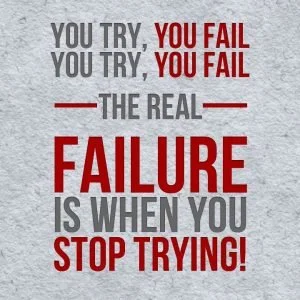
It's not a question of, "If you knew you might fail at something, would you still do it?" We attempt things in which we run a risk of failure all the time, understanding that failure is normal, just one of those things. In the pursuit of success, we are generally quite tolerant of failure, but only because we view it as a stepping stone toward victory. "If at first you don't succeed, try and try again." By this perspective, failure is okay as long as we get back up and keep trying, keep aiming for success (as suggested by memes like these from the internet).
Why can't failure simply be the graceful discovery of one's own limitations? Do we really have to keep trying to assert and affirm our worth? Why can't failure simply be failure, one aspect of life deemed every bit as glorious and enjoyable as success? Why does it even matter whether we succeed after we fail? Why can't we just, well, fail?
Why can't failure just be failure, end of story, something that itself retains as much value as success? Why do we feel the need to put a positive spin on failure? Why must we seek to find its silver lining? Why can we not celebrate it for exactly what it is: failure!
Why must failure stand always in the shadow of success? Why can't failure stand alone, all by itself, with no relationship to success at all? Without a system of measurement, such as a grading system, benchmark, identified goal, or finish line, there can be neither success nor failure. There can be only action, neither good nor bad, neither victorious nor otherwise. Just action for action's sake. Experience for experience's sake. Life for life's sake.
Most individuals in modern society, as I see it, have very high levels of confidence and self-belief. We're the children of parents who have coached us that anything is possible, that our abilities are limited only by our imaginations, that we can achieve anything, become anything, be anything. To this day, these positive messages still swirl through the cultural ethos and, to be frank, I sometimes wonder if this hasn't backfired on us somewhat. After all, if anything you want is possible and you have yet to achieve what you want, then the fault must be completely yours. If failure is bad and you've failed, then what does that say about you? That's a lot of pressure!
This question (most often attributed to Robert H. Schuller) is a a perfectly fine one to consider. It can help us clarify our own hopes, dreams, goals and desires, as well as inspiring us to think more in terms of possibilities than impossibilities. But, as worthwhile as this question may be, it may also be helpful for us to remember one simple reality: that not only can you fail, but in all likelihood you actually will. It's this truth that we, as a voraciously wealth-celebrity-and-success-hungry society, have been so reluctant to admit, that failure (at least to some degree) is the norm, not the exception. You are probably going to fail. And so it is that I offer an alternative question to the one posed above, which is:

Now, that’s is a truly interesting question, much like the one asked. It’s genuinely worth pondering.
If you knew that you were going to fail at something, would you still do it?
The logo for the Spartan Race series (at the top of this post) says, "YOU'LL KNOW AT THE FINISH LINE." Even this slogan is an example of failure bias. For me, "YOU'LL KNOW AT THE STARTING LINE" seems infinitely more fitting, more enticing, more reasonable.
Knowing that I could not and would not reach the finish line, knowing that I could not and would not succeed, knowing that I was going to fail, I laced up my sneakers, donned my skin-tight Under Armour skivvies and just said, "Eff it." I decided, even though I knew I was going to fail, I’d just show up at the starting line. The result? Well, I'll let this video tell the tale:
Sadly, most of the obstacles (of the 24) didn't record, but I guess that's what happens when an amateur wields a GoPro for the third time ever. Either way, the lesson has been revealed. When you expect to succeed, sometimes you will fail (and that's okay). And when you expect to fail, sometimes you will end up succeeding (and that's okay too). Regarding the Spartan Sprint, I failed... to fail. Life can be funny that way, I guess.